

Delivering exceptional CX is crucial in the insurance sector, as it involves promises of protection that can be realized only after extensive paperwork and verbiage. For the UK insurance sector, delivering outstanding CX now is not merely a part of strategic planning but a concrete goal for the future. With the onset of digitization, policyholders are aware and don’t just expect to hear the long-wait music and mechanical conversation. The expectation involves efficiency, personal human touch, and technological practicality.
In this blog, we will talk about practical ways to help UK insurers transform complex customer journeys into seamless, simple experiences that are built around human requirements.
According to Imarc Group’s UK Insurance Market Size & Forecast 2026-2034, valued at USD 476.2 billion in 2025, the UK insurance market is expected to reach USD 895.1 billion by 2030 at a CAGR of 7.01%.
Hyper-Personalization: Beyond the Generic Greeting
Gone are the days when emails mentioning “Dear Valued Customer” were a thing. Customer data is now analysed in depth by insurers to deliver customized experiences and make customers feel valued and important.
According to the UK Customer Satisfaction Index (UKCSI) published by the Institute of Customer Service in January 2026, which benchmarks customer satisfaction across 277 organisations and organisation types in 13 sectors, the customer satisfaction score for the UK insurance sector was 79.7 — a significant improvement of 2.2 points higher than in January 2025.
Best Practice
By adopting advanced data analytics and putting customer data to full use, hyper-personalization in interactions can be achieved. A regular experience can be transformed into an exceptional one by using predictive algorithms to recommend services and products based on customers’ choices and behaviour patterns.
AI and Chatbots: The New Besties in Town
From mechanical, boring, and repetitive responses to personal and human interaction, AI and chatbots have accomplished a lot. Now, chatbots can engage in thoughtful dialogue and help customers understand a policy’s clauses, while also being available to listen to frustrations regarding a claim.
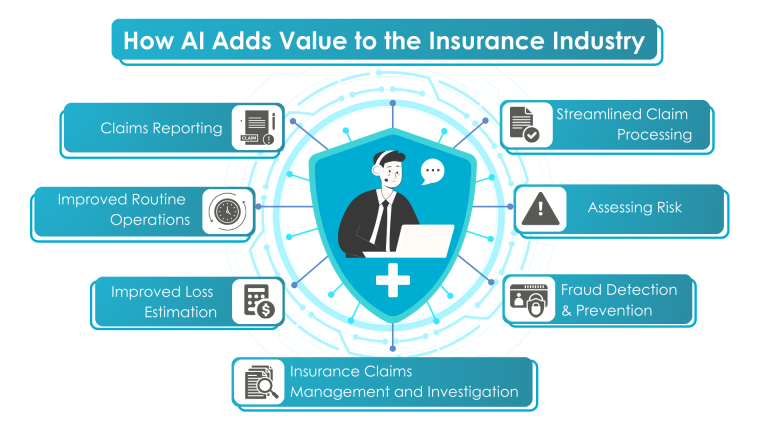
According to EXL’s 2025 report, AI in UK Insurance: Real Progress, Real Potential, 92% of insurers in the UK are using AI, with the majority advancing beyond early pilots. According to the Earnix 2026 Insurance Industry Trends Report, 43% of insurers have integrated AI across most of their functions.
Best Practice
To facilitate unified interactions, the UK insurance sector should leverage AI. Also, to handle intricate queries and deliver accurate, prompt replies with a human touch, companies should invest in advanced natural language processing tools.
Omnichannel Experience: Seamless Transfers
Customers today switch from one communication channel to another in the blink of an eye. It’s frustrating for customers to wait in a queue for a long time and then have to repeat their whole issue from the start to a live chat. Omnichannel experience is the feature that defines the future of enhanced customer experience in the UK insurance sector, where the customer journey can be both managed and traced equally.
Best Practice
For a peaceful interaction, all communication channels should be integrated into a unified system. Also, to deliver a seamless experience, it is vital that customers’ conversations are transferred from live agents and mobile apps to chatbots without losing continuity.
Virtual Reality (VR) and Augmented Reality (AR): The Future Is Now
Previously, Virtual Reality (VR) and Augmented Reality (AR) were things of sci-fi. However, they have now entered the insurance world and offer immersive experiences. Now, customers can take policy walkthroughs and AR-based risk assessments. These technologies are setting up higher standards for customer engagement and making the journey smoother.

Best Practice
As mentioned above, with the advent of modern technology, AR and VR have begun to take over the insurance world by delivering exceptional experiences. Virtual policy demonstrations and risk assessments using AR establish new standards for customer experience.
Ethical AI and Transparency: Building Trust in a Digital Age
At present, data security is a major concern when the whole world revolves around statistics and information. Thus, with the onset of technology, leveraging AI security and transparency has become a major concern. It’s essential that customers feel confident that their data is being handled responsibly.
As per data published in Kiteworks’ GDPR Enforcement Trends article, as of March 2026, 443 breach notifications per day are received by European data protection authorities — a 22% year-over-year increase. Through mid-2025, more than 2,800 fines have been issued, with the cumulative total now exceeding €7.1 billion.
Best Practice
Transparency in communication and ethical AI practices should be promoted. Customers should be clearly informed about how their data is being used, and communication about privacy practices should be reviewed and reflected. Also, to ensure impartiality, AI algorithms should be audited frequently.
Sustainable Practices: Say, Green!
It’s an age where customers are aware of climate change and prefer companies that work towards a green future. Thus, insurers are also adopting climate-friendly, sustainable practices, such as carbon offset initiatives.
Best Practice
It would be a smart move to integrate sustainability into your corporate and business model. Proposing options like green insurance, carbon offsetting, and reducing carbon footprint, and talking about environmental initiatives, helps grab the attention of nature-minded customers.
How Bill Gosling Outsourcing Can Help
Adopting new technology is not the only solution for enhancing customer experience. It is a major concern that the customer gets the right assistance when they require it. Bill Gosling Outsourcing offers an integrated system of technology, data-driven insights, and experienced human expertise that helps insurance organisations in the UK improve customer interactions.
BGO can help insurers with:
- Customer service
- Omnichannel support
- Claims support
- Collections and receivables
- AI-powered CX
- Analytics and insights
Conclusion
A customer experience revolution is ready to take over the UK insurance sector. New models are set to deliver an exceptional customer experience by insurers, with the assistance of advanced practices and technologies. These technologies and best practices for enhancing customer experience in the UK insurance sector are making the business more efficient and satisfying for the insured, and more competitive for insurers.
For a broader look at CX outsourcing across financial services, see what to know about CX outsourcing for financial services in 2026.
So, let’s hope for a future where insurance is not just a policy but a positive, engaging, and notable share of your life.
Frequently Asked Questions
What is the relevance of customer experience in the UK insurance sector?
The insurance sector is a highly competitive market, and to enhance customer retention and build trust, customer experience plays a vital role in standing out in the crowd. A considerable distinction can be achieved by offering transparent communication, prompt assistance, and an easy claims process.
What are the major customer experience obstacles faced by UK insurers?
The major challenges include a fragmented customer journey, difficulty offering consistent support across channels, and lengthy waiting times.
What role can Bill Gosling Outsourcing play to help the UK insurance sector improve customer experience?
Bill Gosling Outsourcing offers an integrated system of trained teams, analytics, and AI-powered technology. These capabilities assist insurers with customer experience, collections, back-office operations, and omnichannel engagement.
How does the blend of AI and human-led service affect the dynamics of insurance CX?
The future of CX in the insurance sector requires speed and empathy. This combination can be achieved through automation for efficiency and human support for intricate and sensitive issues. A connected customer journey can be accomplished by leveraging technology and keeping the human connection intact.
Does personalisation help enhance the insurance customer experience?
Leveraging customer data enables the insurer to make communication more connected, and the recommendations tailored to need. A personalised interaction makes a customer feel valued and connected, not just another policy number.